 02 9159 9010

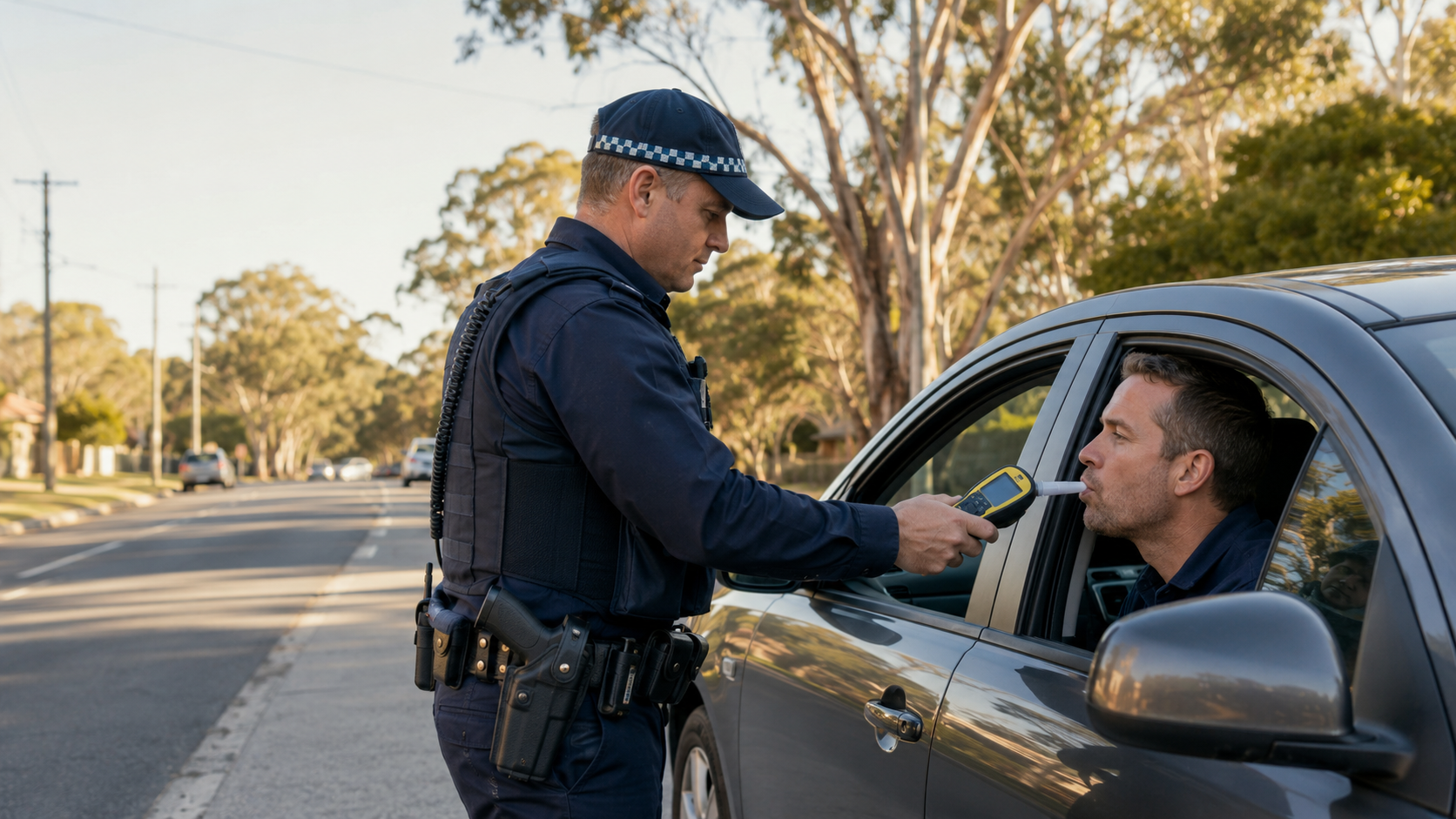
Table of Contents
- Can You Refuse a Roadside Breath Test in NSW?
- The roadside breath test
- The breath analysis is the serious one
- You’ll also lose your licence
- When police can and can’t test you
- Is there ever a lawful reason to refuse?
- Which test are you charged with refusing?
- What to do if you’re asked to take a test
- Common questions
- Charged with refusing a breath test? Talk to us
Can You Refuse a Roadside Breath Test in NSW?
No. If a police officer lawfully asks you to take a breath test in NSW and you say no, you’ve committed an offence, whether or not you’d been drinking. Refusing isn’t a loophole. It’s a separate charge, and for the formal test it’s punished as heavily as the worst drink driving offence on the books.There are actually two different tests, and what happens when you refuse depends on which one you knock back. The quick roadside test is the less serious one to refuse. The formal breath analysis, done on the proper machine after you’ve been arrested or taken to a station or breath testing van, is the one that carries a fine of up to $3,300, up to 18 months in prison, and a long licence loss for a first offence.The roadside breath test
Under the Road Transport Act 2013 (NSW), an officer can require you to take a breath test if they have reasonable cause to believe you’re driving, were driving, are in the driver’s seat trying to start the car, or are supervising a learner. They can signal you to pull over, and you have to stop. This is the handheld screening test used at a random breath testing (RBT) stop or after you’ve been pulled over. If it’s positive, you’ll be arrested and taken for the formal test.If you refuse or fail to take the roadside breath test, the maximum penalty is a fine of 10 penalty units, which is $1,100. It’s the least serious of the refusal offences, but it’s still a conviction you’d rather avoid, and refusing usually leads straight to arrest anyway.The breath analysis is the serious one
After a positive roadside test or an arrest, police take you to a station or the breath testing van for a breath analysis on the approved instrument. That result is the one used in court. Refusing this test is where the real trouble starts.For a first offence, refusing a breath analysis carries a maximum fine of 30 penalty units ($3,300), up to 18 months in prison, or both. A second or later offence lifts that to 50 penalty units ($5,500), up to 2 years in prison, or both. Those are the same maximums that apply to high-range drink driving.You’ll also lose your licence
A conviction for refusing a breath analysis is a mandatory interlock offence. For a first offence, the court must disqualify you from driving for between 6 and 9 months, then place you on an interlock licence for at least 2 years. An interlock is a breath-testing device wired into your car that stops it starting until you give a zero reading, and you pay for it. A court can grant an exemption in limited cases (for example, where you genuinely have no access to a vehicle to fit one), but if it does, a straight disqualification of at least 12 months applies instead. Either way, you’re off the road for a long time.When police can and can’t test you
The law puts limits on breath testing, and they matter. Police can’t require a breath test or analysis more than two hours after you last drove. They also can’t require one at your home. So if you’ve made it home and you’re no longer driving, the situation is different, and it’s worth getting advice before assuming you were obliged to comply. These limits are technical, and whether they apply turns on the exact facts, so don’t rely on them without checking with a lawyer.Is there ever a lawful reason to refuse?
There’s one defence written into the law. If you can prove you were unable to take the test on genuine medical grounds, that’s a defence to a refusal charge. Being nervous, drunk, or unhappy about being stopped isn’t a medical reason. A real medical condition that stopped you providing a sample might be, but you’d need evidence, usually from a doctor. “I panicked” or “I didn’t think I had to” won’t help.Which test are you charged with refusing?
What to do if you’re asked to take a test
The short version is: take the test. Refusing rarely helps and usually makes things worse, because you can be convicted of refusing even if your reading would have been under the limit. You don’t beat a drink driving charge by refusing. You swap it for a charge that’s often punished more harshly.
You can stay calm and polite, give police your name and address, and take the test without answering questions about how much you’ve had to drink or where you’ve been. If you’re then charged, that’s the point to get a lawyer involved, not after you’ve turned a borderline case into a certain conviction.
Common questions
Can I ask for a lawyer before taking a breath test?
You can ask, but police don’t have to wait for a lawyer before requiring the test, and delaying can itself be treated as a refusal. Take the test, then get legal advice.
What if I blew over on the roadside test but under on the proper machine?
The breath analysis on the approved instrument is the reading that counts in court. The roadside screening test is only a preliminary check. That’s another reason not to refuse the formal test. It can actually help you if the roadside result was misleading.
Will refusing keep my drink driving off my record?
No. Refusing is its own offence and carries its own conviction, licence loss and interlock. For a genuine drink driving charge a section 10 or non-conviction order is sometimes possible, and that door can close once you refuse.
Charged with refusing a breath test? Talk to us
If you’ve been charged with refusing a breath test or analysis, or with any drink driving or traffic offence, call Blackridge Law on 02 9159 9010 for a free consultation. We appear at Local Courts across Sydney and NSW and can tell you quickly whether the test was lawfully required and what your options are.
This article is general information only and is not legal advice. Every case turns on its own facts, so please contact Blackridge Law about your specific situation.