 02 9159 9010

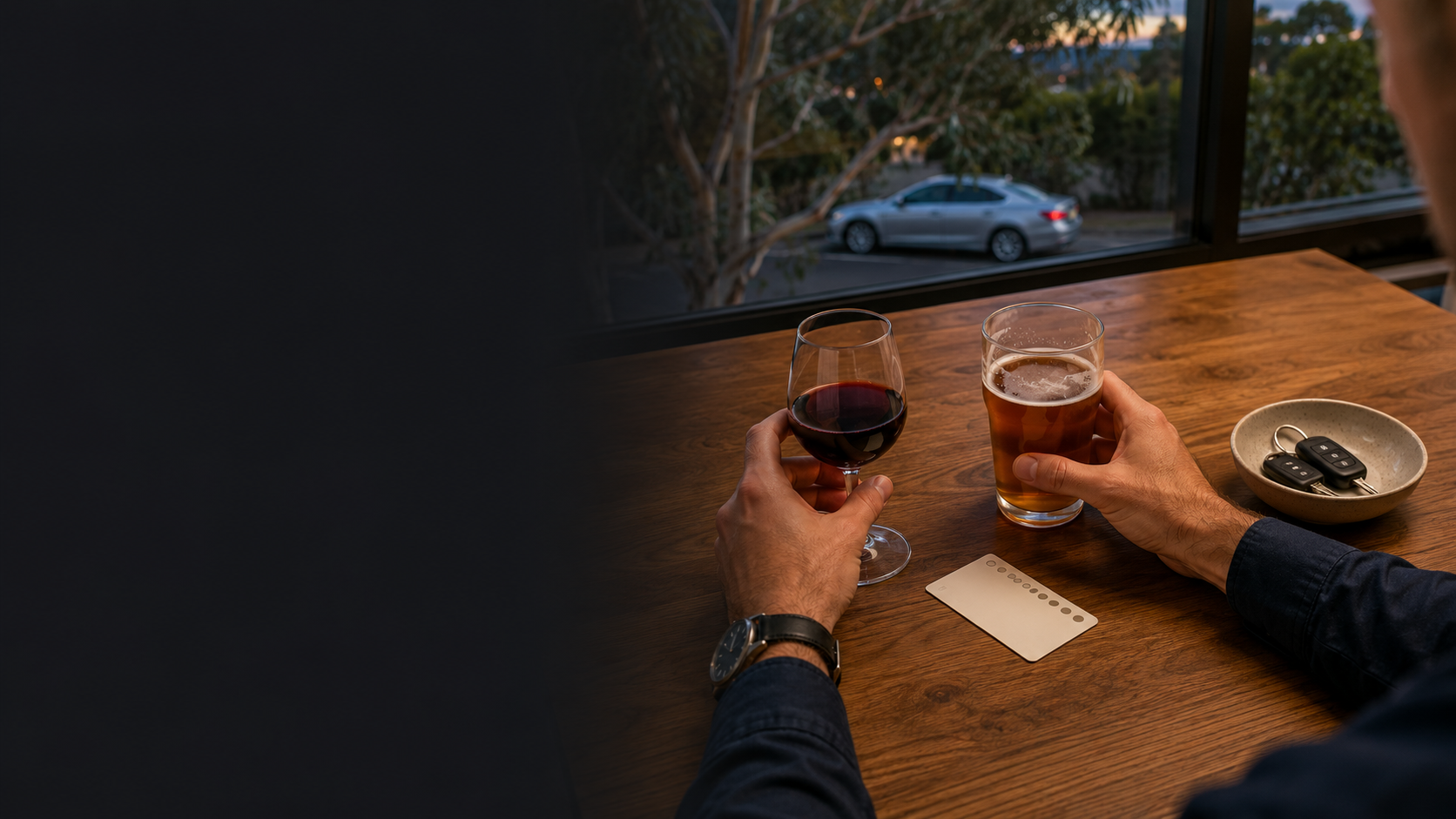
How Many Standard Drinks Can You Have and Still Drive in NSW?
There’s no number that’s safe for everyone. NSW law doesn’t set a limit on drinks, it sets a limit on the alcohol in your blood, and how many drinks it takes to get there changes from person to person. Your weight, whether you’ve eaten, how tired you are, how strong the drinks are and how fast you’re drinking all change the reading. Two people can have the same three schooners and blow different numbers.If you hold a full licence, the limit is a blood alcohol concentration (BAC) below 0.05. If you’re on your learner or provisional (P1 or P2) licence, the limit is zero. So the honest answer is this: some full licence holders stay under 0.05 after one or two standard drinks in the first hour, but plenty don’t, and you can’t know your own reading without being tested. If you need to be certain you’re under, don’t drink before you drive.What a standard drink actually is
A standard drink contains 10 grams of alcohol. That’s less than most people pour at home. A 285ml middy of full-strength beer, a 100ml glass of wine or a 30ml nip of spirits is about one standard drink each. A schooner of full-strength beer is closer to 1.6 standard drinks, and a generous glass of wine at a restaurant can be nearly two. The glass in front of you is usually more than one standard drink, which is a big reason people get caught out when they think they’ve only had a couple.Counting standard drinks helps, but it doesn’t tell you your BAC. There’s no reliable rule like one drink an hour keeps you under. It’s a rough guide at best, and it fails for plenty of people.The blood alcohol limits in NSW
NSW sets different limits depending on your licence and the vehicle you’re driving. There are three that matter to most drivers:
- Zero for learner and provisional (P1 and P2) drivers. Any alcohol in your system is an offence.
- Under 0.02 for special category drivers, such as people driving heavy vehicles, public passenger vehicles like taxis and buses, or vehicles carrying dangerous goods.
- Under 0.05 for everyone else on a full licence.
If you go over 0.05, the offence you’re charged with depends on your reading. The ranges are set by the Road Transport Act 2013 (NSW):
- Low range: 0.05 to below 0.08
- Mid range: 0.08 to below 0.15
- High range: 0.15 and over
The higher the range, the heavier the penalties, and mid and high range offences can carry a term of imprisonment.
What happens if you’re caught just over
Most people who get caught are in the low range, often after misjudging a few drinks. A first low range offence can be dealt with in one of two ways.Police can hand you a penalty notice, which is a fine of $704, plus an immediate three-month licence suspension. You don’t go to court, but you do lose your licence for three months.Or the matter goes to court. If you’re convicted, the maximum fine is $2,200, and the court disqualifies you from driving. For a first low range offence the disqualification is six months automatically, which the court can reduce to a minimum of three months. A conviction also means a criminal record, which can matter for work, travel and future insurance.There’s a third path worth knowing about. A court can find the offence proven but decide not to record a conviction, which means no criminal record and no disqualification. That outcome isn’t automatic, and whether it’s realistic depends on your circumstances, your driving history and how the matter is presented. This is where getting advice early makes a difference. Our drink driving lawyers deal with these matters every week across Sydney.Mid and high range offences are more serious again. They carry larger fines, longer disqualifications, a mandatory alcohol interlock in most cases, and the real possibility of a prison sentence for high range readings. If you’re facing any traffic charge, the range on the charge sheet tells you how much is at stake.Where do you stand?
Frequently asked questions
Can I drive the morning after drinking?
Sometimes, but not always. Alcohol leaves your body at a roughly steady rate, and a big night can leave you over 0.05 well into the next morning. If you were still drinking after midnight, an early start the next day is a real risk. Sleep and coffee don’t speed up how fast alcohol clears.
Does a low range charge give me a criminal record?
Only if you’re convicted. If you get a penalty notice and pay it, that’s not a criminal conviction, though you still lose your licence for three months. If the matter goes to court and the court records a conviction, it goes on your record. A court can choose not to record a conviction, but that’s not guaranteed.
I've lost my licence. Can I appeal?
If police suspended your licence on the spot, you can appeal that suspension to the Local Court, and there are strict time limits, so act quickly. If a court disqualified you, you may be able to apply to have the disqualification removed after a set period. Our licence appeal lawyers can tell you what applies to your situation.
Talk to us before you decide anything
If you’ve been charged with drink driving, or you’re not sure whether you were over the limit, get advice before you plead or pay a fine. The path you choose in the first week often shapes the outcome. Blackridge Law appears at courts across Sydney and NSW and offers fixed fees, so you know where you stand.
Call Blackridge Law on 02 9159 9010 for a free consultation.
This article is general information about NSW law and not legal advice. Every case turns on its own facts, so contact us about your specific situation.